Why Is My St. Augustine Grass Turning Brown in the Summer in South Florida?
TL;DR: St. Augustine grass turns brown in South Florida summers most commonly because of chinch bug damage, fungal disease (gray leaf spot or brown patch), or irrigation failure, not heat alone. Each cause leaves a different visual pattern, and treating the wrong one usually makes the lawn worse.

If you've noticed brown patches spreading across your St. Augustine lawn this summer, you're not alone. It's one of the most common calls we get across Boynton Beach, Delray Beach, and the rest of Palm Beach County once the heat and humidity settle in. The instinct is to blame the sun, but St. Augustine grass turning brown in summer is almost never about heat by itself. South Florida's combination of intense sun, heavy rain, and irrigation systems running on autopilot creates the exact conditions chinch bugs and turf fungus need to take hold.
What Are the Most Common Causes of Brown St. Augustine Grass in Summer?
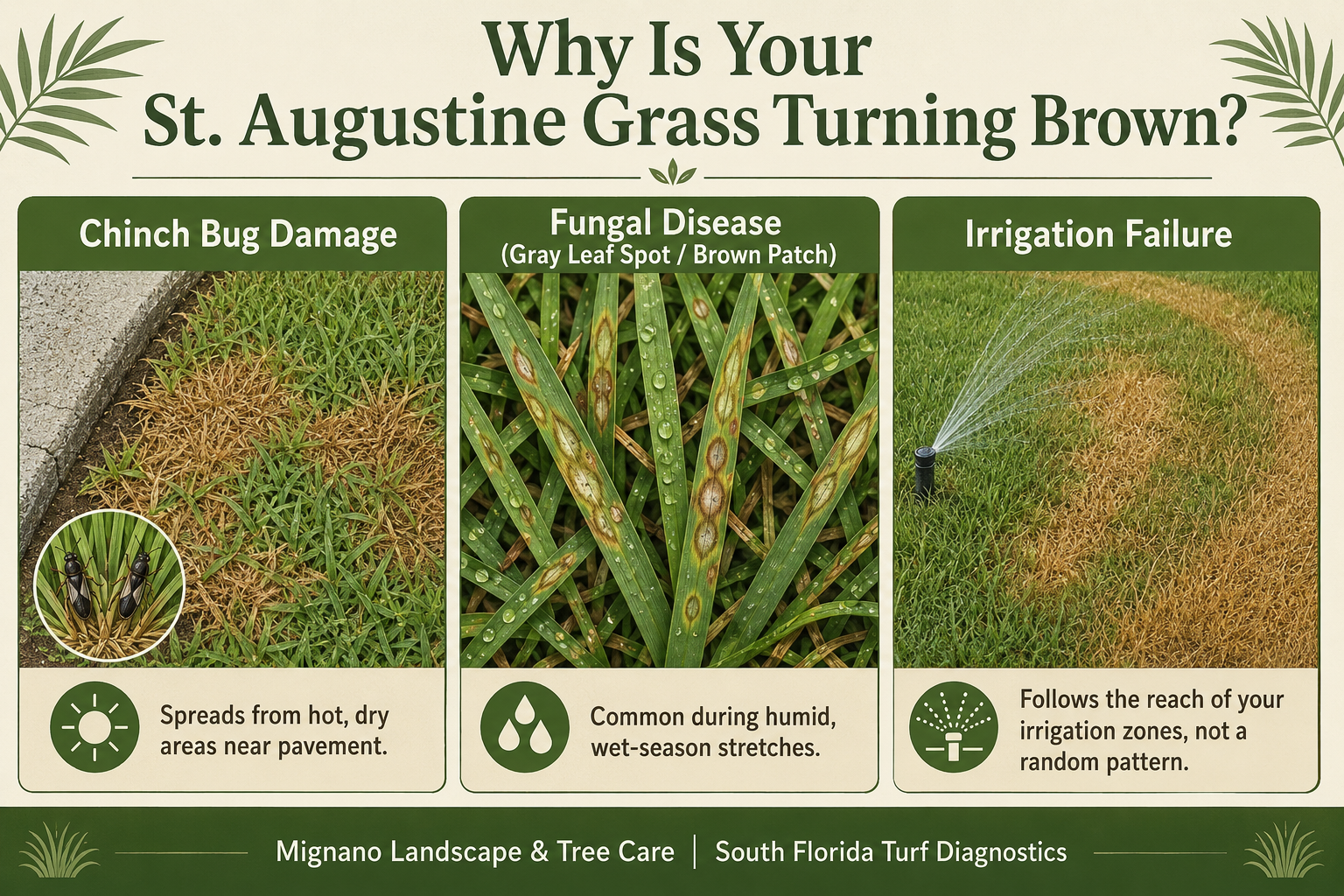
The three most common causes of brown patches in South Florida St. Augustine during summer are chinch bug damage, gray leaf spot fungal disease, and irrigation gaps. From a distance, all three look similar. Up close, they behave differently, and they require completely different treatments.
Chinch bugs feed on the grass at the soil line and thrive in the hottest, driest sections of a lawn, particularly near driveways, sidewalks, and pool decks. Fungal disease spreads under different conditions entirely, favoring wet, humid stretches and areas with poor airflow. Irrigation failure shows up as a pattern problem, brown zones that map directly to a broken or misaligned sprinkler head. Properly identifying which of the three you're dealing with is the first real step toward fixing it.
How Do You Tell the Difference Between Chinch Bugs, Fungal Disease, and Drought Stress?
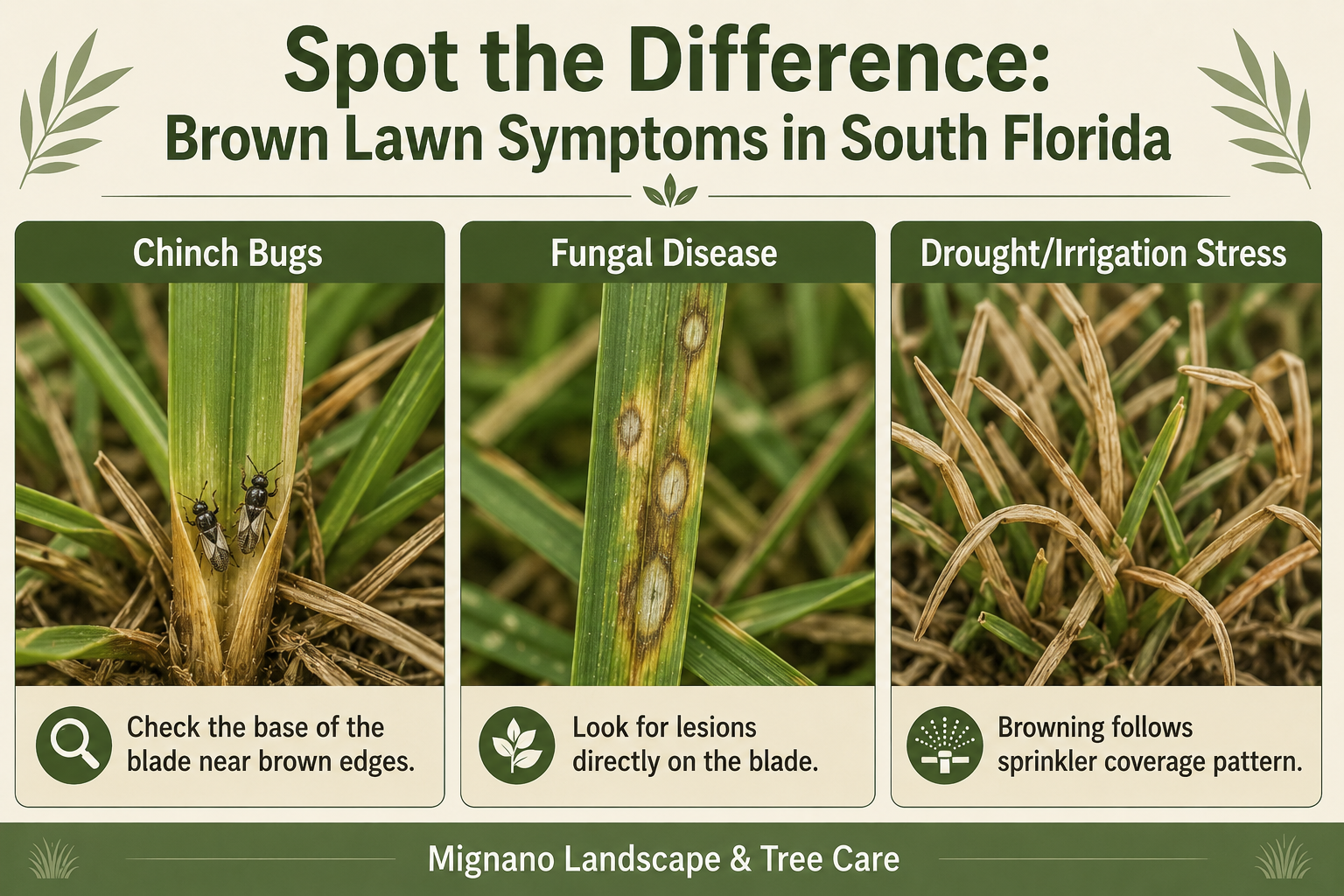
Chinch bug damage appears as irregular, spreading brown patches in the hottest, driest areas of the lawn, often expanding outward from pavement. Fungal disease creates lesions visible on individual blades when you look closely. Drought stress browns more uniformly, following the exact reach of your irrigation zones.
A simple way to check for chinch bugs at home: part the grass at the edge of a brown patch and look at the base of the blades for small black and white insects. If the damage instead shows spotting or a water-soaked look to the blades, you're more likely looking at gray leaf spot or brown patch fungus, both common in Palm Beach County turf during the wet season.

What Should You Do When You Find Brown Patches in Your St. Augustine Lawn?
The correct first step is diagnosis, not treatment. Applying fungicide for what turns out to be chinch bugs, or increasing irrigation for what's actually a fungal problem, compounds the damage rather than solving it.
Our team's approach starts with a full assessment of the affected area, the irrigation pattern, and recent watering habits before we recommend any product or adjustment. For homeowners looking for the bigger picture on keeping St. Augustine grass healthy through South Florida's full growing season, our
year-round lawn maintenance for South Florida properties guide covers mowing height, irrigation timing, and seasonal fertilization together.
Quick Questions
Why is my St. Augustine grass turning brown in summer in South Florida?
Brown patches are most commonly caused by chinch bugs, fungal disease, or irrigation failure, not heat alone. A professional diagnosis identifies the actual cause before treatment.
How do I know if I have chinch bugs in my St. Augustine grass?
Chinch bugs cluster in hot, dry areas near pavement. Part the grass at the edge of a brown patch and look for small black and white insects at the base of the blades.
"The most expensive mistake we see is a homeowner treating for the wrong problem, applying pesticide for chinch bugs when it's actually a fungal issue, or running the irrigation more when overwatering is what's creating the disease," says Joe Mignano, President of Mignano Landscape & Tree Care and an FNGLA Certified Horticulture Professional.
Get Your Lawn Properly Diagnosed
Guessing at a brown lawn wastes time and money on the wrong fix. Our team brings decades of South Florida turf diagnostics experience to every property we assess, backed by FNGLA certification. If your St. Augustine grass is browning and you're not sure why, request professional lawn care in Boynton Beach and we'll identify the cause before recommending a solution.