What Does a Professional Landscape Design Process Look Like in Boynton Beach?
TL;DR
- A professional landscape design in Boynton Beach starts with a site assessment, soil, drainage, sun exposure, and existing structures, before any plants get chosen.
- The process layers in species selection, irrigation planning, and long-term maintenance built around South Florida's climate and Palm Beach County's soil conditions.
- Properties designed around drainage and plant performance hold up over time. Properties designed around what looked good at the nursery usually don't.
If you've lived in Boynton Beach long enough, you've probably watched this happen on your own street. A new landscape goes in, looks sharp for six months, and by the next wet season half of it is yellowing or gone. That's rarely bad luck. It's almost always a design that skipped a step. Our
landscape design services in Boynton Beach start with the property itself, not a plant list: the soil underneath it, where water moves when it rains, and what's already growing there. We've been designing landscapes across Palm Beach County since 1986, through enough wet seasons and storm seasons to know which shortcuts cost homeowners money two years later. Here's what an actual professional landscape design process looks like, from the first site walk to a planting plan built to hold up.
What Happens During a Professional Landscape Design Assessment?
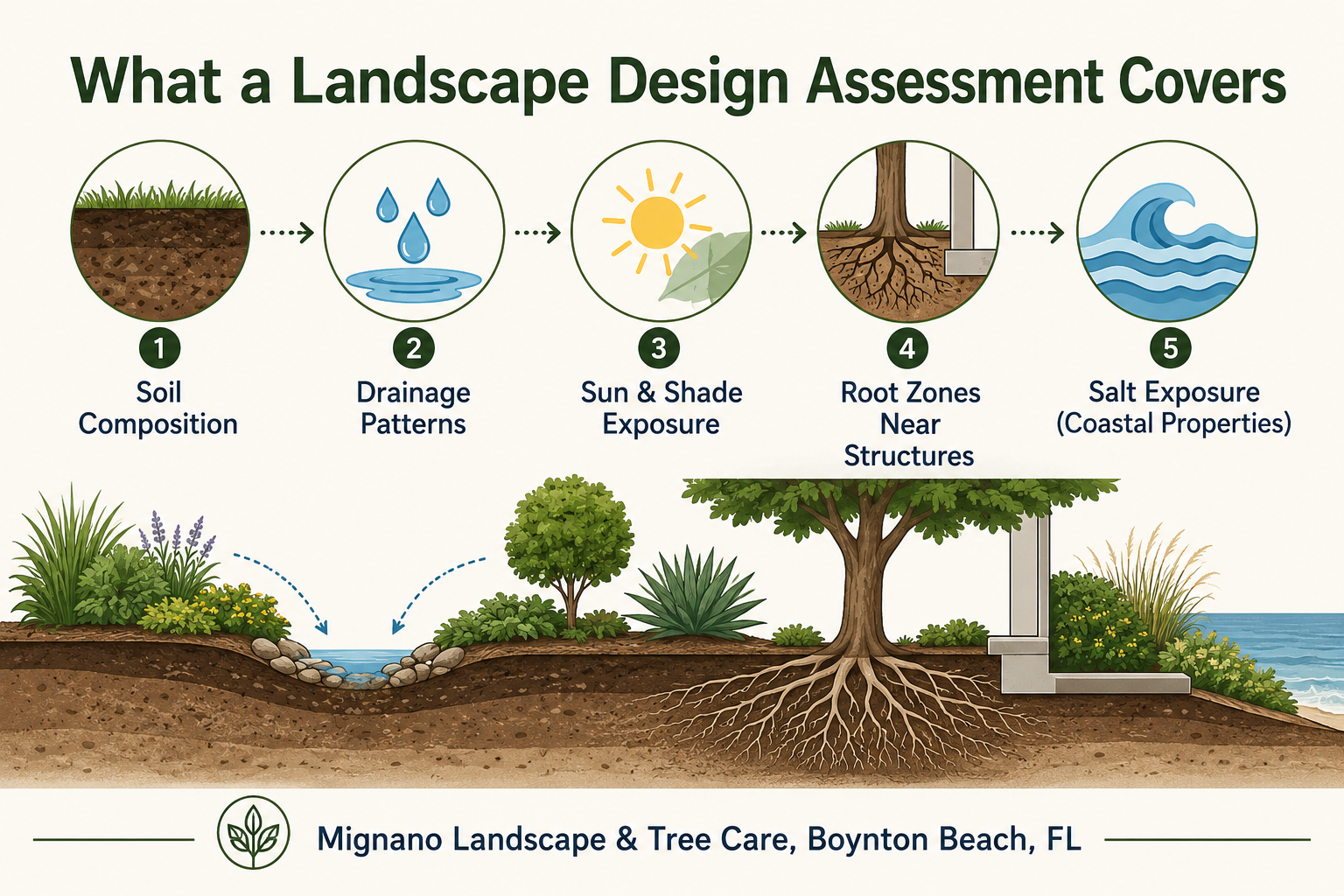
A proper site assessment evaluates drainage patterns, soil composition, sun and shade exposure, existing root systems, and proximity to structures before any design recommendations get made. Plant selection comes after that work, not before it.
Why soil and drainage come before plant selection
Most landscape problems we get called out to fix in Boynton Beach trace back to a design that picked plants first and worried about the ground second. South Florida's soil isn't uniform. A property can have sandy, fast-draining soil along the front and a low spot near the back fence that holds water for days after a storm. Plant a species that needs sharp drainage in that low spot, and you're looking at root rot within a season, no matter how well it was planted or maintained afterward.
What a Boynton Beach property assessment covers
Our team walks the full property, not just the planting beds. That means checking how close mature trees and root systems sit to the home's foundation, where downspouts and gutters discharge, how the irrigation system (if one already exists) is zoned, and where sun exposure shifts through the day as the property's own trees and structures cast shade. We also note any existing salt exposure for properties near the coast, since that changes which species can realistically survive there. This is the groundwork every recommendation that follows gets built on.
How Are Plants Selected for a South Florida Landscape Design?
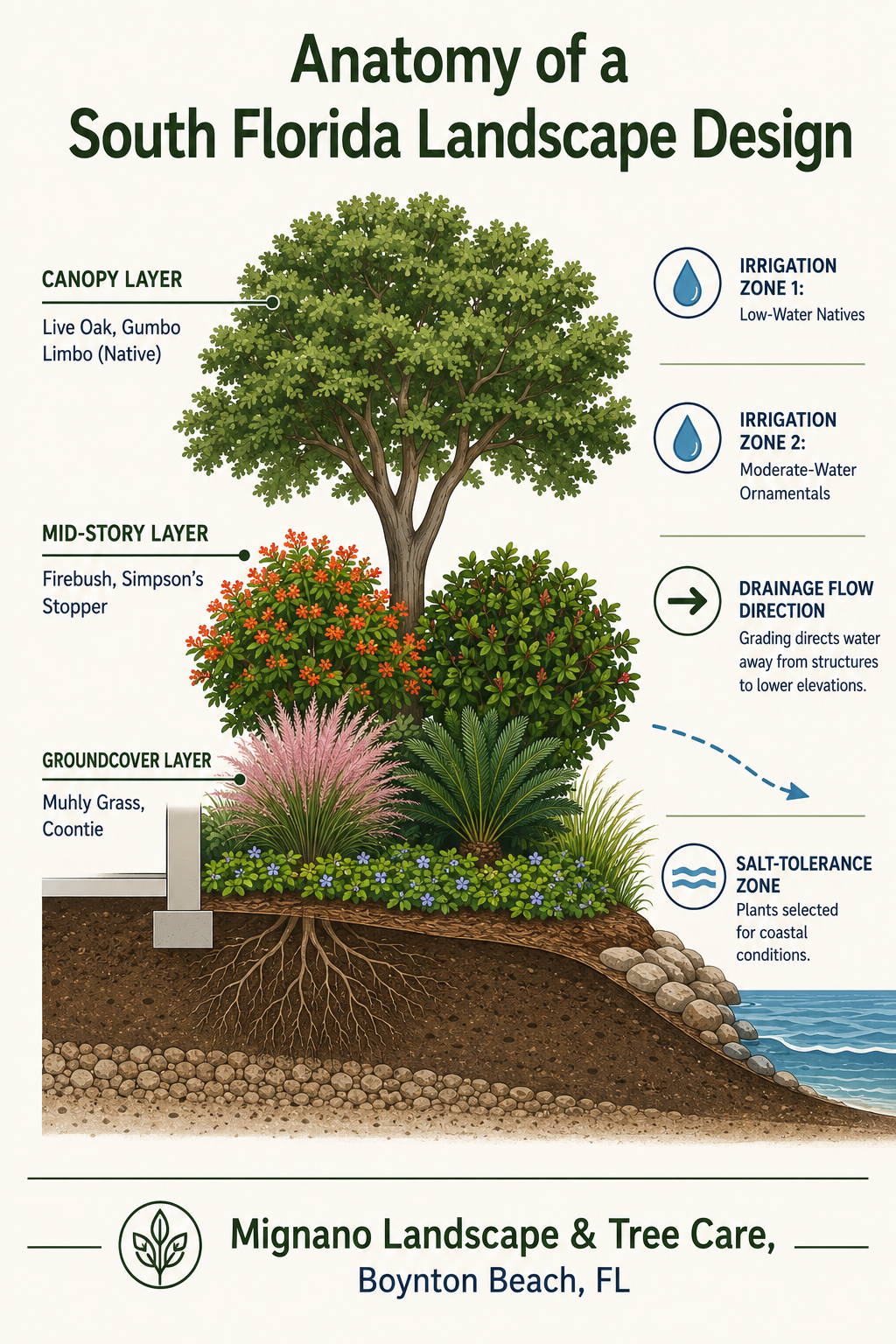
Plant selection in South Florida is driven by climate zone, salt tolerance, root behavior near structures, water requirements, and how each species performs through wet season, dry season, and storm events. Appearance at the nursery isn't part of that equation.
Native vs. non-native plants in Palm Beach County
Native species generally have an advantage in Palm Beach County because they've already adapted to our rainfall patterns, soil pH, and humidity. That doesn't mean a design has to be all-native. Plenty of non-native species perform well here too, and a well-designed plant palette often blends both, chosen species by species for what each section of the property actually needs. The goal isn't ideology. It's a landscape that's still standing and looking right in five years.
Species that perform best in Boynton Beach's conditions
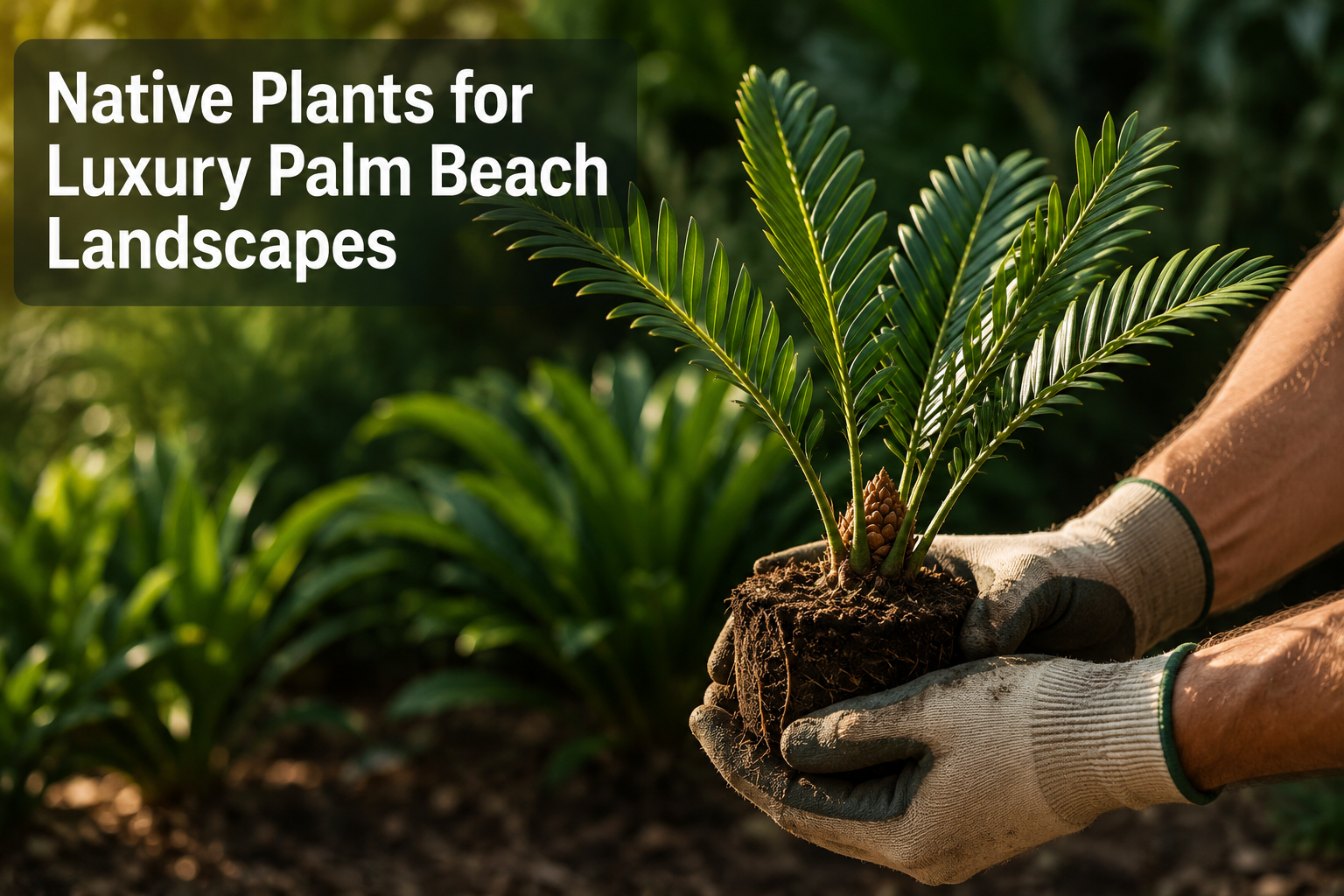
For most Boynton Beach properties, we lean on species like Simpson's stopper, firebush, coontie, muhly grass, saw palmetto, live oak, and gumbo limbo, depending on the site. These hold up to South Florida's combination of heat, humidity, periodic drought, and storm-season wind and rain. Closer to the coast, salt tolerance becomes the deciding factor, and the palette narrows accordingly. For a closer look at which native plants perform best in Palm Beach County, an FNGLA-certified horticulturist evaluates each property individually rather than applying the same plant list to every yard.
How Does Irrigation Factor Into the Design Process?
Irrigation gets planned alongside the planting design, not after it, because water requirements vary by zone, species grouping, and soil drainage. A system installed after planting often can't deliver water where it's actually needed.
Zone planning for South Florida irrigation
Grouping plants by water need, what's called hydrozoning, is one of the more overlooked parts of a landscape design. A design that puts a drought-tolerant native next to a thirsty ornamental in the same irrigation zone means one of them is getting the wrong amount of water no matter how the system is programmed. Our team plans zones around plant groupings from the start, so the irrigation system can actually do its job instead of compensating for a layout that fights itself.
How Boynton Beach's wet and dry seasons affect irrigation design
South Florida runs on two seasons that demand opposite things from an irrigation system. Wet season, roughly June through October, can deliver more rain in a week than some regions see in a month, and overwatering on top of that is a fast way to develop root rot. Dry season requires the opposite approach, with consistent, calibrated watering to keep a young landscape established. A design built around this seasonal swing, rather than a fixed watering schedule, is what keeps plants healthy through both halves of the year.
What Are the Most Common Landscape Design Mistakes in Palm Beach County?
The most common mistakes are choosing species that can't tolerate South Florida's humidity and salt air, ignoring drainage before planting, and selecting plants based on how they look in a nursery pot rather than how they'll perform in local soil over the long term.
Species that struggle in Palm Beach County conditions
Plants that thrive in cooler, drier climates often struggle here regardless of how carefully they're maintained. Humidity drives fungal issues in species that aren't built for it, and salt air within a few miles of the coast will damage foliage on plants that lack natural tolerance. We see this most often on properties that worked with a designer unfamiliar with South Florida's specific conditions, where the plant choices made sense on paper but never had a real chance here.
How drainage failures develop after installation
Drainage problems rarely show up on day one. A landscape can look fine for months while water slowly pools against a foundation or collects around root balls that need oxygen to develop properly. By the time it's visible above ground, in yellowing leaves or standing water after a normal rain, the root system below has often already been compromised. Catching this at the assessment stage is far less disruptive than diagnosing it a year later.
Does a Landscape Design Need to Account for HOA Requirements?
In many Palm Beach County communities, HOA landscape guidelines govern plant height, species selection, hardscape materials, and even mulch type. Compliance review is part of any professional design process for a managed community.
What Palm Beach County HOA landscape guidelines typically cover
HOA standards vary by community, but common threads include restrictions on plant height near sightlines and property lines, approved or prohibited species lists, and rules around hardscape materials, colors, and sometimes mulch type. Some communities also regulate how much of a yard can be turf versus planting beds. Designing without checking these guidelines first can mean a finished landscape that has to be partially redone.
How to design within HOA requirements without sacrificing quality
A well-handled HOA review doesn't mean a watered-down design. It means building the plant palette and layout from a list of options that are already approved, so there's no conflict to resolve after installation. Our team reviews HOA documentation as part of the design process for managed properties, which keeps the project moving instead of stalling at submittal.
How Long Does a Landscape Design and Installation Take in Boynton Beach?
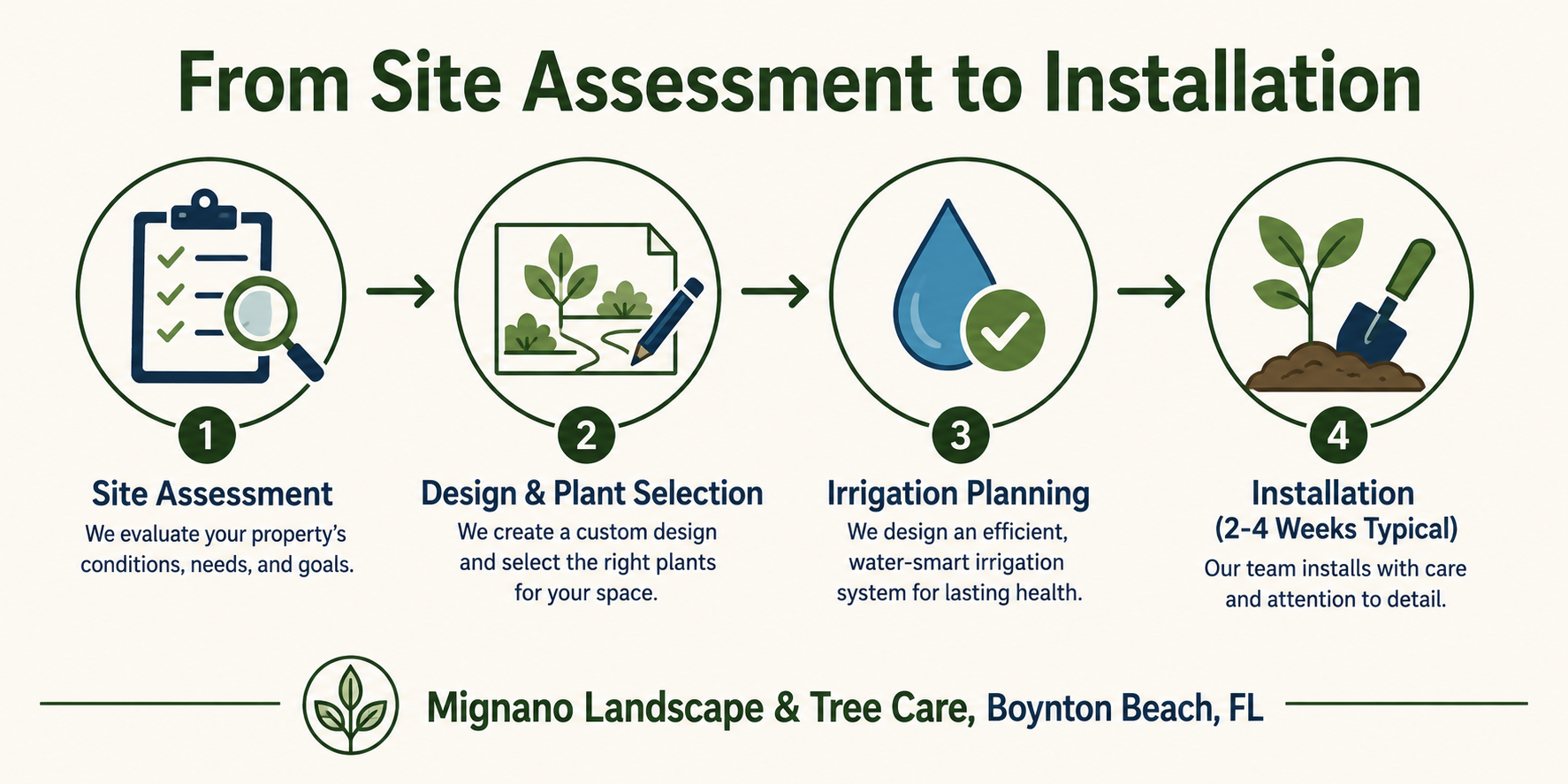
Timeline depends on property size, design complexity, plant availability, and permit requirements. A straightforward residential installation can run two to four weeks from design approval to completion, while larger estate projects take longer.
What affects timeline on larger properties
Larger properties with extensive hardscape, mature tree integration, or multi-zone irrigation naturally take longer to design and install correctly. This is especially true for larger estate properties, where custom estate landscape design in West Palm Beach often involves more extensive site work from the start. Availability of specific plant material can also affect scheduling, particularly for larger specimen trees or less common native species. We'd rather give a property the time it needs than rush a timeline and create problems that surface later.
Seasonal considerations for planting in South Florida
Timing installation around South Florida's seasons matters. Planting heading into wet season gives new root systems a strong start, but it also means getting drainage right from day one, since that's exactly when it gets tested hardest. Dry season installations need a tighter irrigation plan to keep new plantings established without rainfall to lean on. We factor this into scheduling for every project.
Frequently Asked Questions About Landscape Design in Boynton Beach
What is included in a professional landscape design in Boynton Beach?
A professional landscape design includes a full site assessment, soil and drainage evaluation, plant palette selection matched to South Florida's climate, irrigation zone planning, and a phased installation plan. For HOA properties, compliance review is included. Mignano's designs are developed by FNGLA-certified professionals with 40+ years in Palm Beach County.
What native plants work best for South Florida landscape design?
Native species that perform well in Palm Beach County include Simpson's stopper, firebush, coontie, muhly grass, saw palmetto, live oak, and gumbo limbo. These species are adapted to local soil and rainfall patterns and require less irrigation once established. An FNGLA-certified horticulturist can recommend the right mix for your specific site conditions.
How do I prevent root rot in my Boynton Beach landscaping?
Root rot in South Florida landscapes is almost always a drainage issue. Plants installed in soil that retains too much moisture, or in areas where irrigation overlaps, develop root systems that can't access oxygen. Proper drainage assessment before planting, correct species selection for wet or dry zones, and calibrated irrigation schedules are the primary preventions.
Does Palm Beach County restrict what plants I can use in my landscape design?
Palm Beach County has guidelines regarding invasive species, and many HOA communities overlay additional requirements for plant height, species type, and hardscape materials. For properties governed by a homeowners association, a compliance review should be part of the design process before installation begins.
How is Mignano's landscape design approach different from other companies?
Our design team is led by an FNGLA Certified Horticulture Professional with four decades of experience in South Florida's specific soil, climate, and storm conditions. Every design starts with a site assessment, not a plant list, and the three-generation family team that designs your property is also the team that maintains it, which means the design is built for long-term performance, not just installation-day appearance.
Joe Mignano's Perspective
"The properties we design in Boynton Beach and across Palm Beach County are going to live in one of the more demanding climates in the country. Intense UV, salt air within a few miles of the coast, sandy soil that drains fast in some spots and holds water in others, then a hurricane season that tests everything. We've been designing for those conditions since 1986, and what we know from that experience is that the work that matters most happens before a single plant goes in the ground. Soil, drainage, sun exposure, root zones near the house, that's where a landscape either succeeds or fails over time."
- Joe Mignano, President, Mignano Landscape & Tree Care. FNGLA Certified Horticulture Professional.
Schedule a Design Consultation
The best time to design a South Florida landscape is before wet season stress-tests whatever's already there. Properties designed around drainage and species performance outlast the ones that weren't, and that difference becomes obvious by the second or third year.
A walk-through with our team gives you a clear picture of what your property's soil, drainage, and sun exposure actually call for, before any commitment to a plan. We work across Boynton Beach, Delray Beach, Boca Raton, West Palm Beach, Gulf Stream, Highland Beach, Manalapan, and Ocean Ridge, led by an FNGLA Certified Horticulture Professional and supported by ISA-certified arborists for projects involving tree integration.
We're a third-generation, family-owned business that's been part of this market since 1976. The team that designs your landscape is the same team that maintains it for years afterward, which tends to change how a design gets built in the first place.
Schedule a Design Consultation with our team to start with a site assessment of your Boynton Beach property.
Recent Posts