What Do South Florida Properties Really Need From an Irrigation System?
TL;DR
- South Florida's two-season climate, a five-month dry season and a seven-month wet season, creates irrigation demands most of the country never deals with.
- Boynton Beach properties need systems built around seasonal switching, Palm Beach County water restrictions, and the fast-draining sandy soil common to coastal lots.
- A properly calibrated system adjusts as the seasons turn and as the landscape matures, not on a fixed schedule set once and left alone.
If you own property in Boynton Beach, you already know your sprinkler system can't run on the same schedule year round. What works in July will drown your lawn in January, and what keeps grass alive in March will barely dent an August downpour. Sprinkler repair and irrigation maintenance in Boynton Beach come down to one core problem: most systems are installed once and rarely adjusted after that, even as the seasons shift and the landscape around them grows. Our team has spent decades managing irrigation on properties across Palm Beach County, and the pattern is always the same. The system itself is rarely broken. It's just been left to run on assumptions that stopped being true years ago. This article walks through what South Florida's climate actually demands from an irrigation system, where problems tend to start, and how a properly maintained system fits into the rest of your landscape.
What Makes South Florida Irrigation Different From Other Climates?
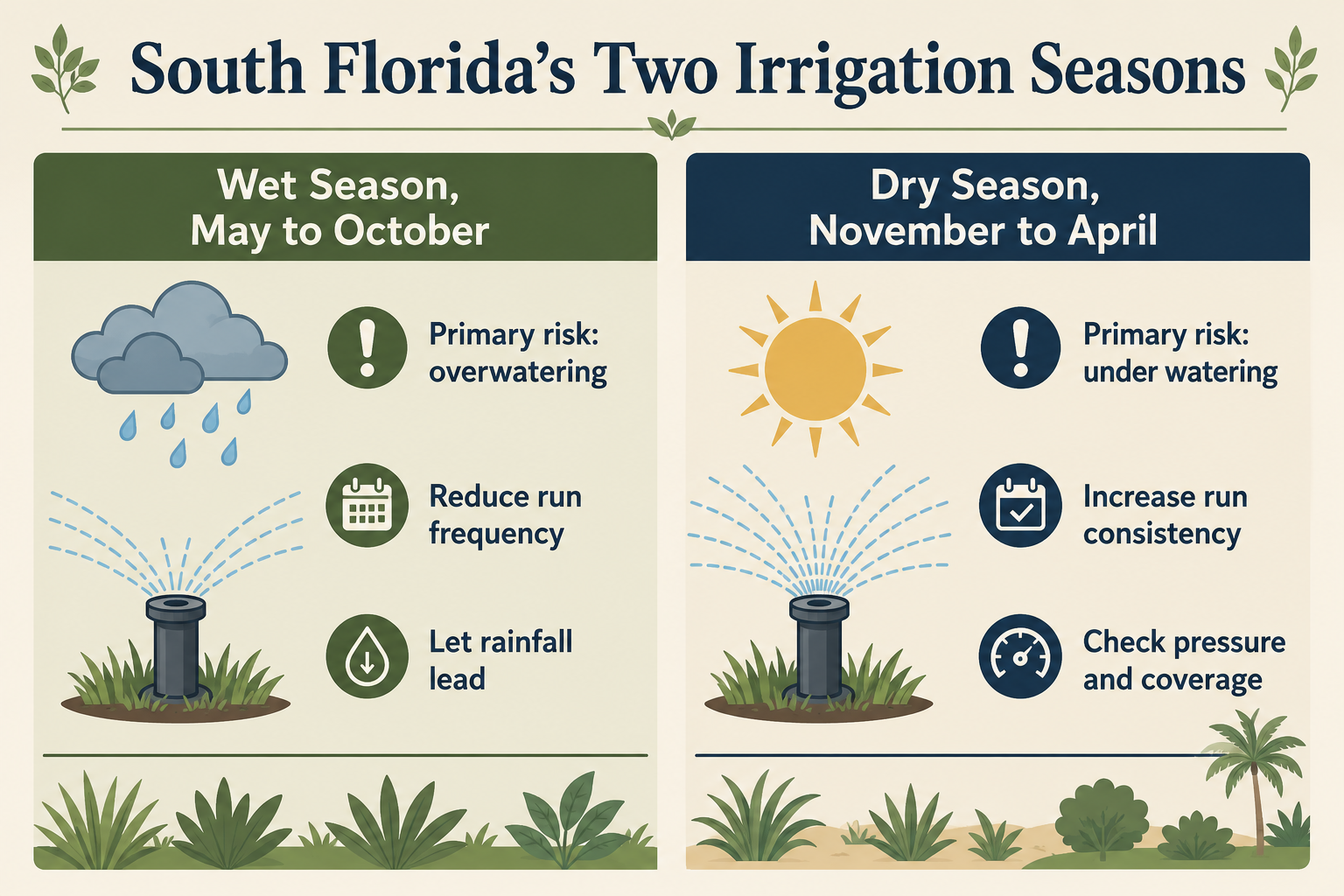
South Florida properties face nearly opposite irrigation demands depending on the time of year. During wet season, roughly May through October, overwatering is the primary risk. During dry season, November through April, under-watering and system strain under sustained drought are the main concerns.
Most irrigation guidance written for a national audience assumes a single growing season with gradual temperature and rainfall shifts. That doesn't apply here. Palm Beach County can go from daily afternoon storms to weeks without measurable rain, and a controller set for one condition will actively work against the landscape once the season turns.
Wet season irrigation management means dialing back frequency and letting rainfall do most of the work. A system still running its dry season schedule in July is often pushing water onto turf and root zones that are already saturated, which invites fungal issues and root rot in South Florida's heat and humidity.
Dry season irrigation requirements go the other direction. Zones that coasted through wet season on minimal supplemental water suddenly need consistent, well-timed coverage. Systems that haven't been checked since spring often reveal clogged heads, misaligned spray patterns, or pressure issues right when the property can least afford them.
What Are the Most Common Irrigation Problems in Boynton Beach?
The most common issues we see in Boynton Beach are dry spots from misaligned or clogged heads, overwatering from controllers that were never adjusted for seasonal rainfall, and pressure imbalances that leave outer zones under-watered while inner zones stay saturated.
Why dry spots appear in coastal properties usually traces back to sandy soil combined with a head that's drifted out of alignment or gotten partially blocked by growth. On coastal lots in Boynton Beach, Ocean Ridge, and Highland Beach, salt air and sandy conditions accelerate wear on fittings and nozzles faster than inland properties experience.
How controller scheduling errors compound over time is the part most homeowners don't see coming. A schedule set correctly at installation gradually falls out of sync as plants mature, as seasons change, and as water restriction schedules get updated. Three years without a review is enough for a system to be delivering water in a pattern that no longer matches the property at all.
How Should a Sprinkler System Be Prepared for Dry Season?
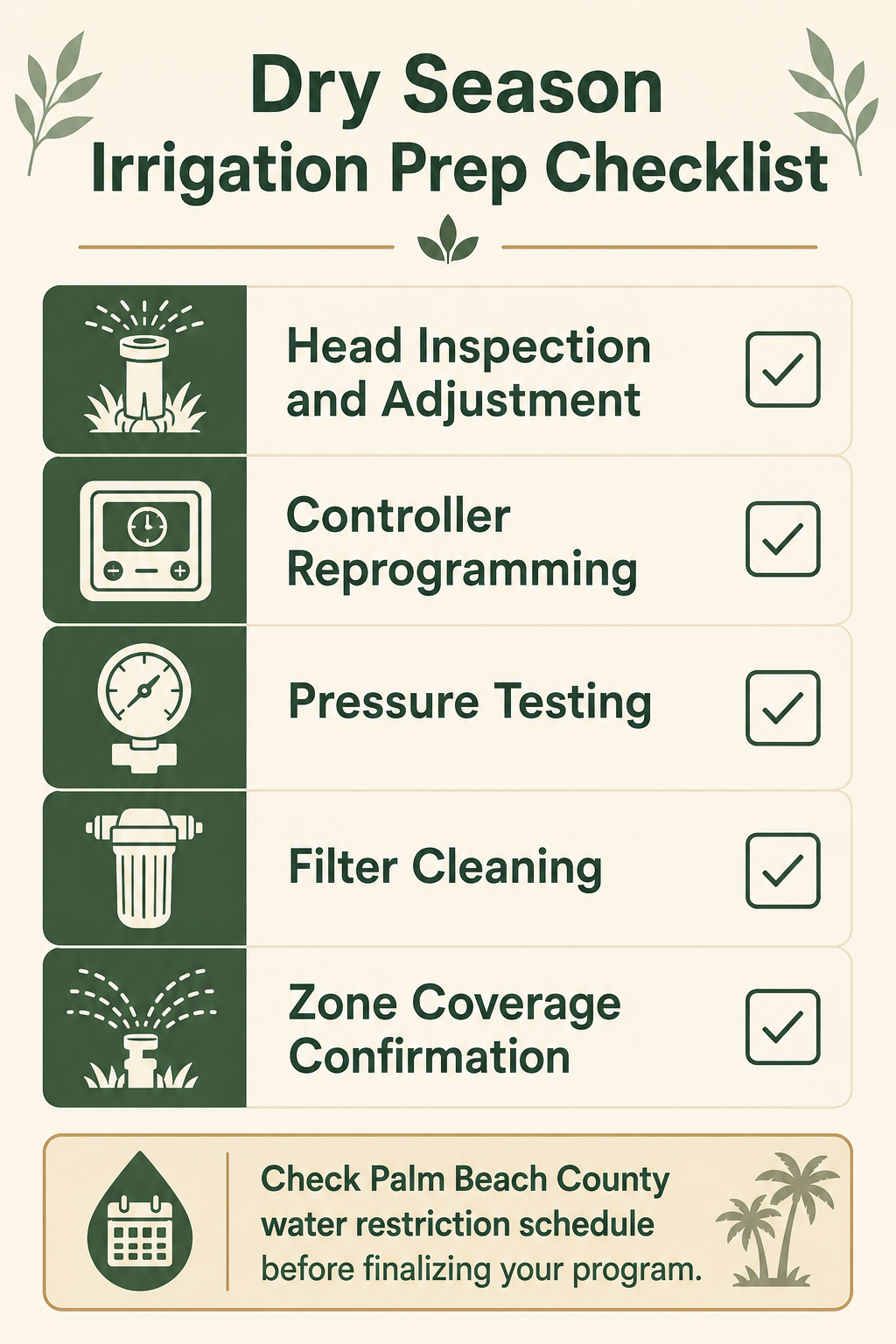
A dry season prep includes head inspection and adjustment, controller reprogramming for reduced rainfall, pressure testing, filter cleaning, and confirmation that every zone is reaching its intended coverage area before the dry months begin.
What a professional dry season irrigation check covers starts at the controller and works outward. We test pressure at the source, then walk each zone individually to check head rotation, spray pattern, and coverage overlap. Any zone showing weak pressure or an uneven spray gets flagged before it becomes a dead patch of turf.
Water restriction schedules in Palm Beach County determine which days and hours a property is permitted to irrigate, and those schedules can shift by municipality and by season. A system that isn't programmed around the current restriction schedule risks both compliance issues and inefficient watering, since the allowed windows aren't always the ideal watering times for South Florida's climate.
How Does Sandy Coastal Soil Affect Irrigation System Design?
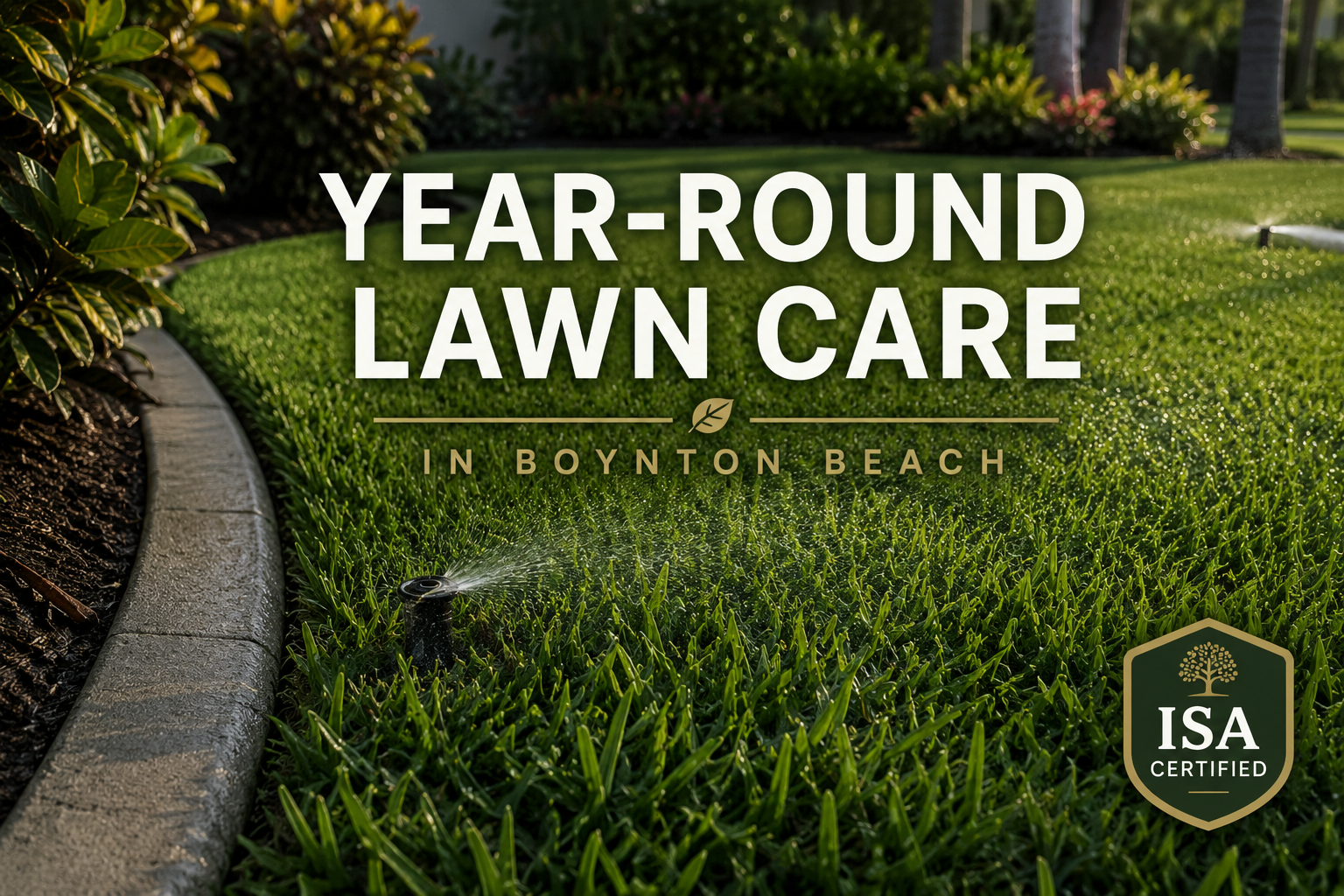
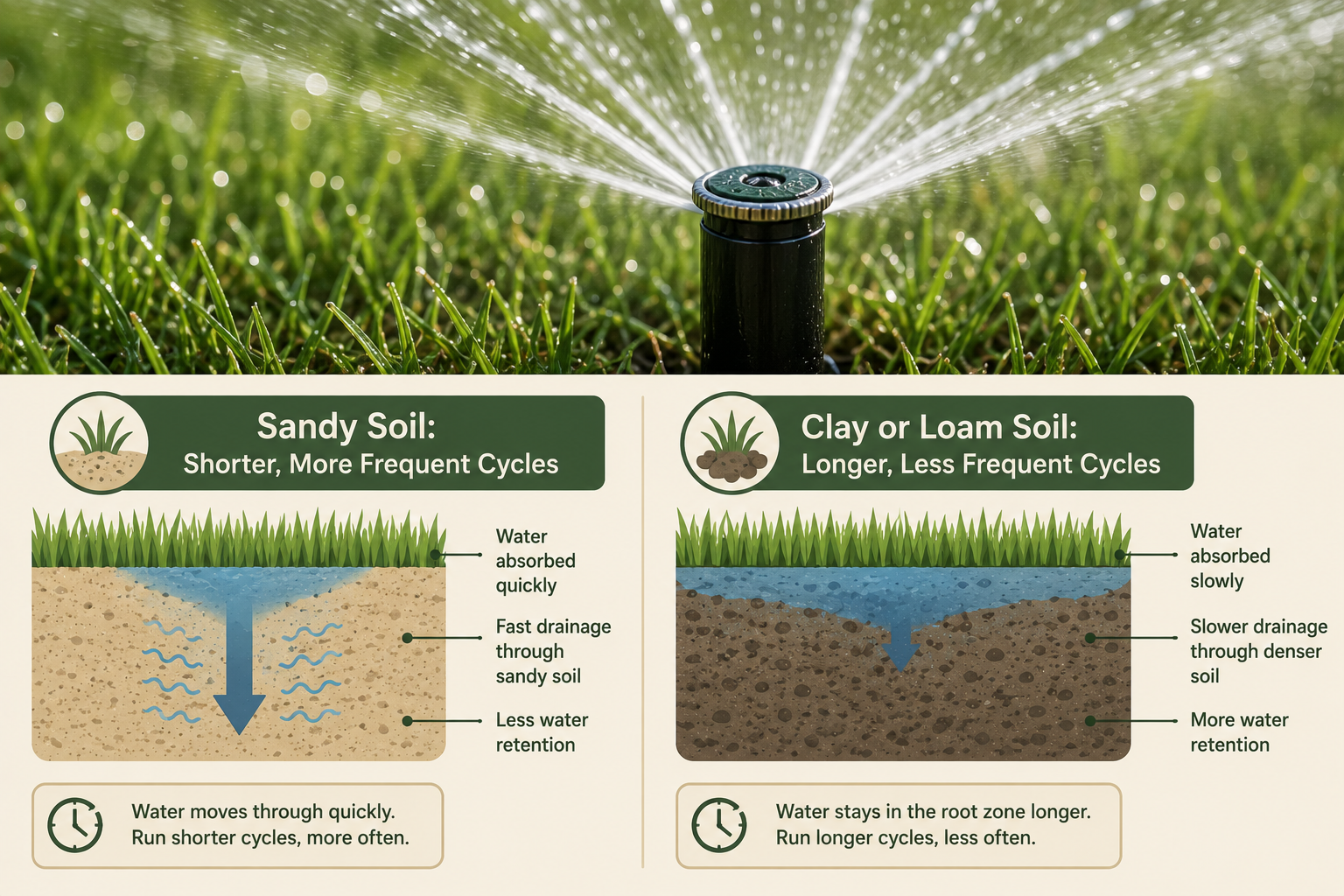
Sandy soil drains fast. Water moves through it quickly and doesn't hold near the root zone the way clay or loam does, which means irrigation systems on coastal Boynton Beach and Highland Beach properties generally need shorter, more frequent run times rather than long, infrequent cycles.
How to match run times to soil drainage rates depends on the specific zone and what's planted there. Turf, shrubs, and specimen trees all hold water differently, and a system designed around a single blanket run time across the property is usually overwatering some zones while underwatering others.
Species that require special irrigation consideration near the coast include salt-sensitive plantings and anything with a shallow root system, both of which need more frequent, lighter watering than deep-rooted, salt-tolerant species growing just a few yards away.
When Does an Irrigation System Need Professional Repair vs. Replacement?
Individual head, valve, or controller failures are almost always worth repairing. Systemic issues, like inadequate zone coverage, aging poly pipe in sandy soil, or insufficient pressure for the property's current planting plan, typically point to a system that needs redesign rather than another round of repairs.
Signs a system has grown past its original design capacity show up as recurring problems in the same zones no matter how many times a head gets replaced. If a property has added planting beds, expanded turf areas, or matured significantly since the system was installed, the original zone layout may no longer match what's actually growing there.
What a professional irrigation evaluation covers includes a full walk of every zone, a pressure test at multiple points, and a review of the planting plan against current coverage. Irrigation services in Boynton Beach include this kind of full evaluation for properties unsure whether repair or redesign makes sense.
How Is Irrigation Integrated Into a Full Landscape Program?
Irrigation isn't a standalone system. It's calibrated against the planting plan, the fertilization schedule, and the seasonal clock, and a system left unadjusted as the landscape matures ends up delivering water incorrectly as plants grow and their needs change.
How irrigation schedules should change as plantings establish follows a simple principle: new plantings need more frequent, gentler watering while root systems establish, then less frequent, deeper watering once they're settled. A schedule that never changes after installation ignores this entirely, which is part of why irrigation's role in South Florida lawn health matters as much as the mowing and feeding schedule itself.
Coordinating irrigation with fertilization blackout periods matters because certain treatments require specific dry windows to work correctly. A controller that's still running its old schedule can wash away a fertilization application before it has a chance to take effect.
Frequently Asked Questions About Irrigation in Boynton Beach
How often should I run my sprinkler system in Boynton Beach?
Frequency depends on season, soil type, plant species, and Palm Beach County's current water restriction schedule. Most residential systems run two to three times per week during dry season and once per week or less during wet season, but these are starting points. A professional irrigation check calibrates your system to your property's actual needs.
Why does my irrigation system leave dry spots?
Dry spots are most commonly caused by misaligned or obstructed heads, pressure imbalances between zones, or clogged filters and emitters. On coastal properties, sandy soil that drains unevenly compounds the problem. A head-by-head inspection usually identifies the source quickly.
What are Palm Beach County's water restriction rules?
Palm Beach County and its municipalities operate under South Florida Water Management District irrigation schedules, which restrict watering days and times based on property address. These schedules vary and get updated periodically, so contact your municipality or the water management district for the current schedule at your address.
How do I know if my irrigation system needs repair or full replacement?
Isolated head, valve, or controller failures are typically repair situations. If your system has chronic coverage gaps, aging pipe, insufficient pressure, or a layout that no longer matches your current planting plan, a professional evaluation determines whether redesign makes more sense than continued repair.
Can an irrigation system be designed to conserve water in South Florida?
Yes. Properly designed systems use weather based or soil moisture controllers, matched precipitation rate heads, and drip emitters in the right zones to reduce consumption. A system built around Horticultural BMP principles applies water where and when it's needed, not on a fixed schedule regardless of rainfall.
Joe Mignano's Perspective
"Irrigation is one of those systems where the problem people call us about is almost never the actual problem. It's the symptom of a controller that hasn't been touched in three years, or a zone that was designed for plants that are now twice the size they were at installation. We've been managing irrigation on South Florida properties long enough to know the system has to stay a living part of the landscape program, not something running quietly in the background on a schedule nobody revisits. When we set up or service a system, we're calibrating it to what the property needs right now, not what it needed at installation."
— Joe Mignano, President, Mignano Landscape & Tree Care, FNGLA Certified Horticulture Professional
Schedule an Irrigation Inspection Before Dry Season Starts
Dry season starts in November, and most irrigation systems in Boynton Beach aren't set up for it. The properties that come through the dry months in the best condition are the ones that had a system check completed before the season turned, not after the first dead patch of turf shows up.
Our team offers a full irrigation inspection and dry season calibration: complete head check, pressure test, controller reprogramming, and coverage assessment across every zone on the property. This isn't a side service tacked onto lawn care. It's handled by the same team managing your full landscape program, with FNGLA certification and decades of experience across Boynton Beach, Delray Beach, Boca Raton, Highland Beach, Ocean Ridge, Gulf Stream, and Manalapan.
Schedule an Irrigation Inspection through our irrigation services page and get your system calibrated before dry season puts it to the test.
South Florida properties don't need a generic irrigation schedule. They need a system that's been checked, adjusted, and calibrated by people who understand what sandy coastal soil, a two-season climate, and Palm Beach County's water rules actually require. That's the difference between a sprinkler system that runs and one that's actually working for the property it's on.
Recent Posts